Rajnath Singh Claims Sardar Patel Could Have Resolved Kashmir Issue Swiftly Without Nehru's Interference
Defence Minister Rajnath Singh has asserted that India's first home minister, Sardar Vallabhbhai Patel, was capable of integrating Jammu and Kashmir as seamlessly as Hyderabad had Pandit Jawaharlal Nehru not intervened. The remarks shed new light on historical debates surrounding the partition era and the initial handling of India's princely states.
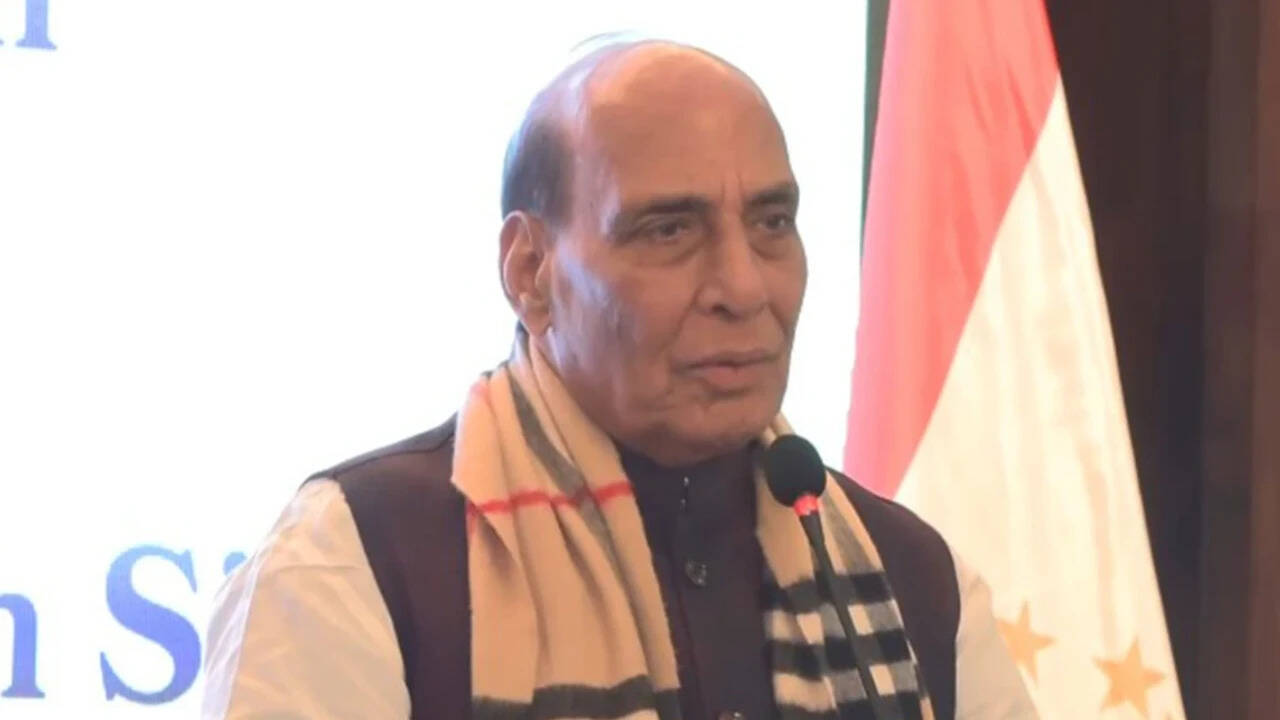
- Defence Minister Rajnath Singh states Sardar Patel could have resolved the Kashmir dispute with the same ease as the integration of Hyderabad.
- Singh attributes the delayed resolution and complication of the Kashmir issue directly to the intervention of India's first Prime Minister, Jawaharlal Nehru.
- The statements revive historical scrutiny over early post-independence governance and the differing administrative approaches of India's founding leaders.
NEW DELHI — Union Defence Minister Rajnath Singh made striking historical assertions regarding India's post-independence era, claiming that Sardar Vallabhbhai Patel privately expressed confidence in resolving the Jammu and Kashmir accession with the exact efficiency seen during the annexation of Hyderabad, had it not been for Prime Minister Jawaharlal Nehru's policy interventions.
The remarks plunge back into the complex geopolitical landscape of 1947–1948, a turbulent period when hundreds of princely states were being unified into the newly independent Indian dominion. While Sardar Patel successfully orchestrated the integration of several reluctant territories through strategic diplomacy and decisive action, the northern frontier of Jammu and Kashmir presented a unique military and political challenge that eventually led to a protracted international dispute and the division of the region.
According to reports published by the Times of India, Singh's commentary adds fresh ammunition to ongoing political and historical debates concerning the leadership decisions of India's earliest administration. Critics and historians frequently re-examine these foundational friction points to understand how ideological differences between Patel and Nehru shaped the modern borders and internal security architecture of the nation.
Looking ahead, these historical revisions are expected to fuel further discourse among political analysts and academics regarding the legacy of India's partition. As national narratives continue to evolve, contemporary political figures frequently invoke the contrasting styles of Patel and Nehru to debate governance models and strategic decisiveness in modern statecraft.
Reader Sentiment & Assessment
86 responsesHow do you evaluate this investigative report? Anonymous 1-click reaction.
Start Your Day With Verified Intelligence.
Essential national dispatches, market intelligence, and global investigations delivered directly to your inbox every morning at 7:00 AM. Zero fluff, 100% verified.