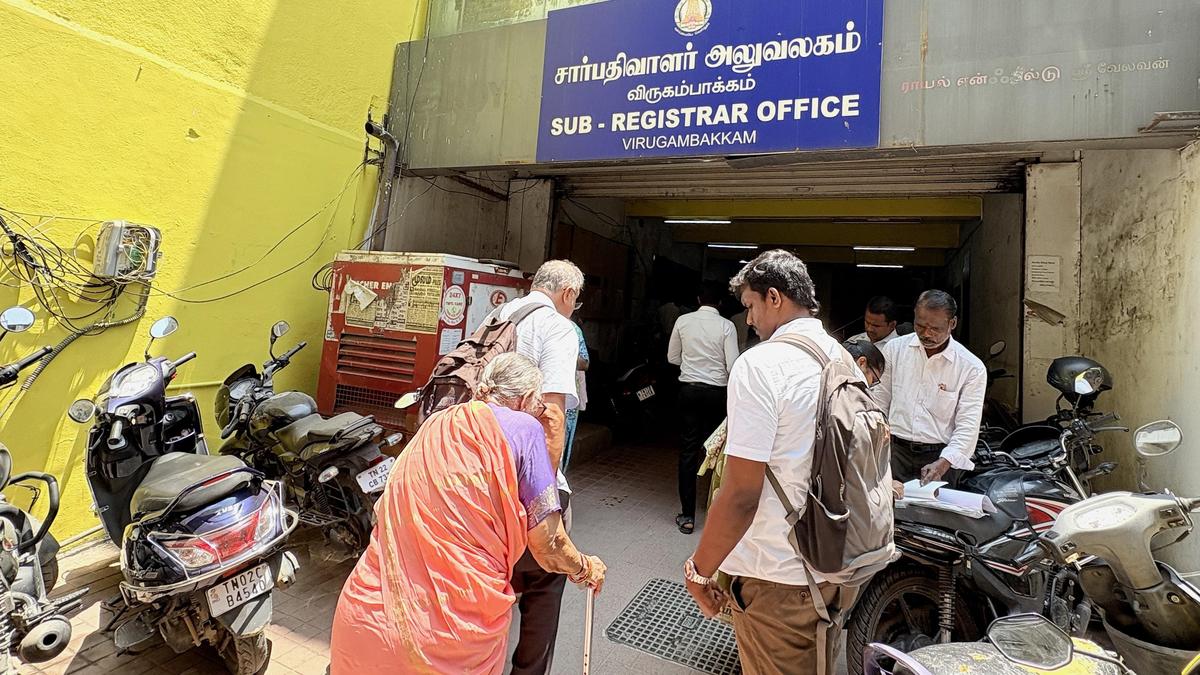
In a sweeping administrative overhaul, the Tamil Nadu government has announced the imminent establishment of five cutting-edge Model Registration Hubs during the inaugural phase of a major civic modernization initiative. Operating entirely outside traditional territorial constraints, these specialized offices will empower residents to finalize vital documentation—including property deeds and marriage certifications—at any facility of their personal choosing, effectively dismantling legacy jurisdictional bottlenecks that have long encumbered local bureaucracy.
Historically, citizens across the state were rigidly bound to specific Sub-Registrar Offices based strictly on geographical boundaries, frequently resulting in severe administrative congestion, protracted delays, and logistical friction for routine bureaucratic procedures. The newly unveiled framework directly addresses these decades-old systemic inefficiencies by decoupling civil registration services from fixed physical locations, representing one of the most ambitious bureaucratic decentralization efforts undertaken in the region's recent history.
According to investigative reports published by The Hindu, state officials have prioritized citizen convenience and operational transparency as the primary drivers behind this administrative pivot. While formal stakeholder consultations and infrastructural preparations are currently moving at a rapid pace, policy analysts note that the initiative reflects a broader national trend toward digital-first, frictionless public service delivery designed to minimize bureaucratic harassment and enhance overall governmental accountability.
Looking ahead, the state administration intends to closely monitor the operational metrics and throughput of these initial five centers before systematically scaling the project to a wider array of urban and rural locations. If proven successful, this pioneering framework could well serve as a transformative blueprint for civil registration reform nationwide, fundamentally redefining how state governments interact with their constituents in the digital era.