Trump Administration Strips Rwanda and South Africa from US Trade Deal Following Sanctions Row
The Trump administration has moved to remove Rwanda and South Africa from a key United States trade agreement, citing recent sanctions against Rwanda's defense ministry and broader concerns over trade compliance. The decision marks a significant shift in Washington's engagement with two African nations amid escalating geopolitical tensions.

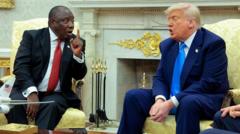
- Move follows Treasury sanctions on Rwanda's defense ministry just days prior, signaling a punitive trade response.
- Both Rwanda and South Africa lose duty-free access to U.S. markets, potentially disrupting billions in bilateral commerce.
- Diplomatic sources suggest further retaliatory measures or negotiations may follow as African Union monitors the fallout.
The Trump administration announced on Thursday its decision to remove Rwanda and South Africa from the United States' preferential trade framework, a shift that takes effect immediately and stems from recent escalations in bilateral sanctions. The move, communicated through a formal notice to Congress, underscores Washington's use of trade policy as a lever in response to perceived governance and security concerns.
The decision arrives barely a week after the U.S. Treasury imposed sanctions on Rwanda's defence ministry, accusing the Kigali government of fueling instability in the eastern Democratic Republic of Congo. South Africa, while not directly sanctioned, faces removal due to its close diplomatic and economic alignment with Kigali, as well as broader disputes over trade reciprocity and market access that have persisted since the agreement's inception in the early 2010s.
A senior U.S. official, speaking on condition of anonymity, told BBC World that the administration remains 'committed to holding partners accountable to shared democratic and security standards.' In Kigali, government spokespeople condemned the measure as 'unjustified economic punishment,' while Johannesburg's foreign ministry issued a statement expressing 'deep regret' and warning of potential setbacks to decades of U.S.-South Africa trade cooperation.